20 min
AI-made image. Real chaos may vary.
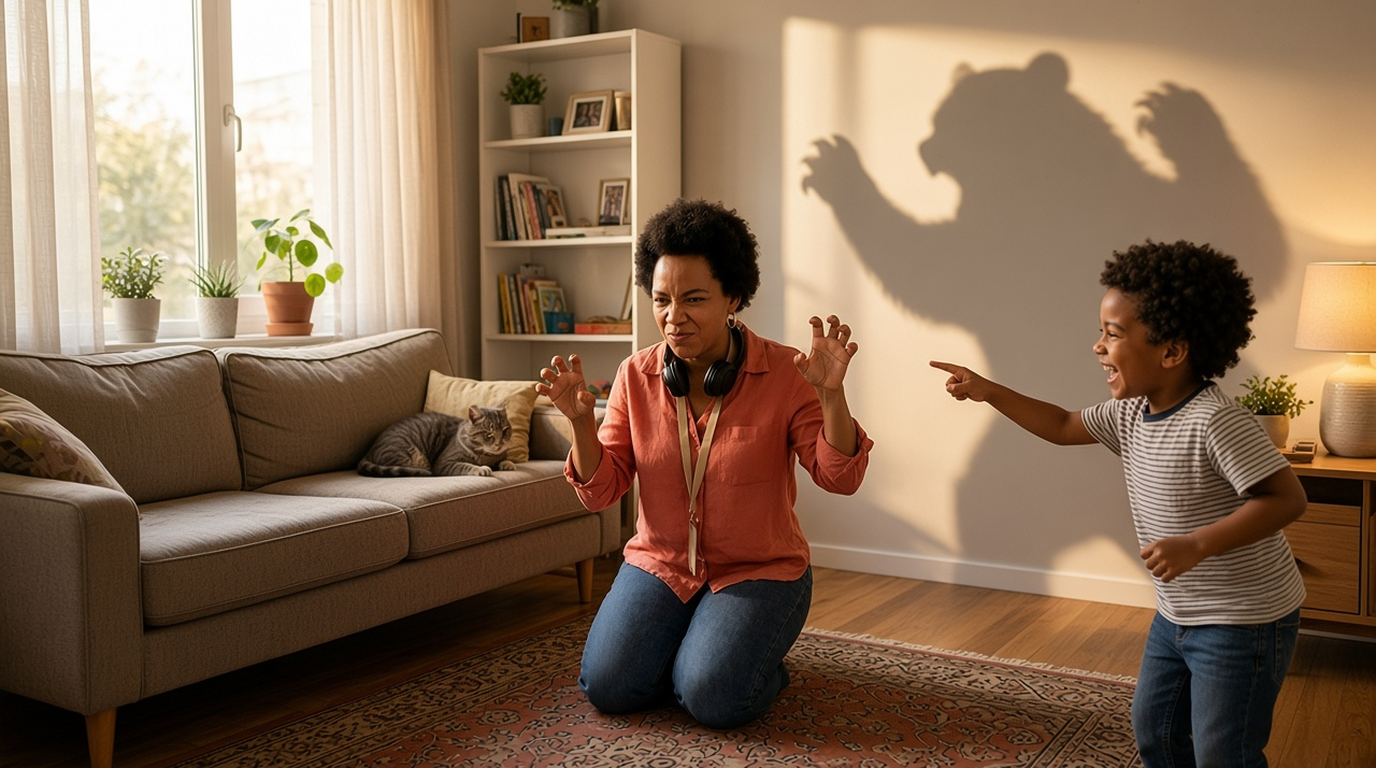
Everyone's Cranky. Let's Act It Out.
Ages 2–8 · Low mess
Twenty minutes is a long time. Here's how to spend it together.
Review
Pulling this one from the pile…
AI-made image. Real chaos may vary.
Review
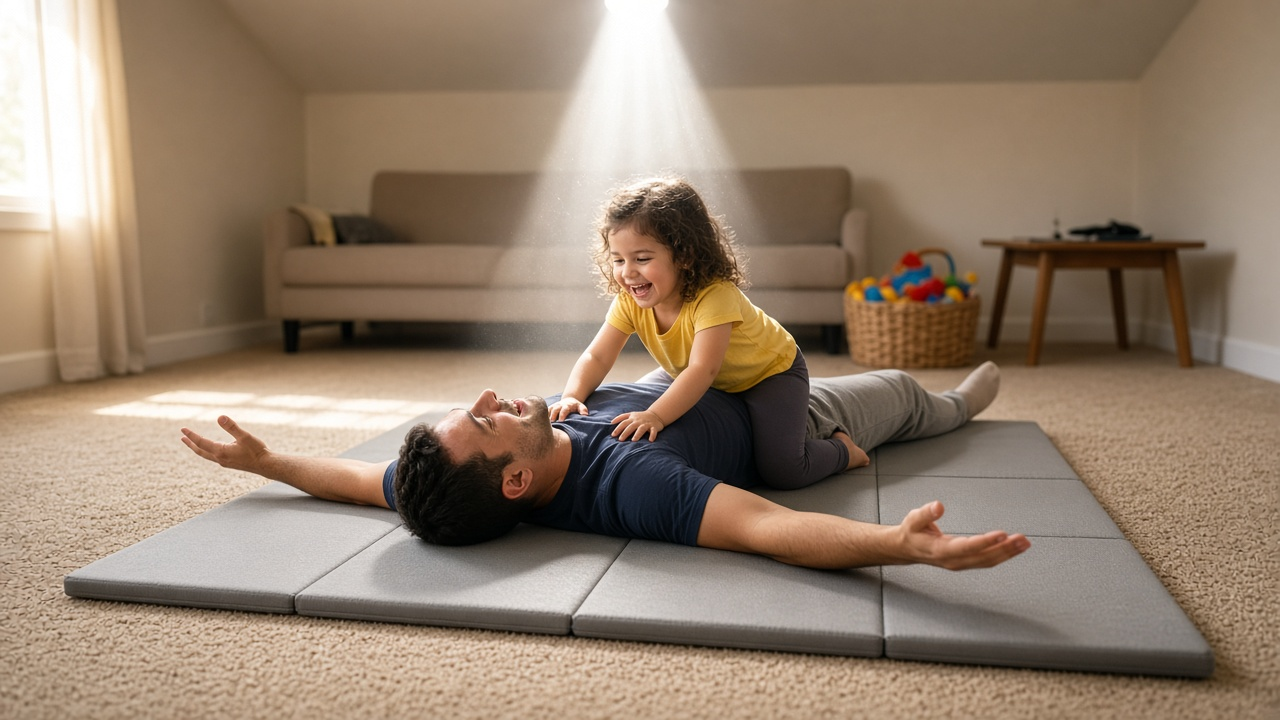
It's 5 p.m. and they're launching off the couch for the ninth time. You could keep saying no. Or you could lie down on the rug and lose a wrestling match.
 By Casey Hopwood · Published: · Last reviewed:
Kids spend most of the day feeling small and hearing "no." Rough-and-tumble play with clear rules lets them feel big while you stay in charge. Pediatricians say it helps kids practice negotiating, winning, losing gracefully and not hurting the people they play with. And "come climb on me" goes over better than "stop climbing on the couch."
You don't have to be good at this. Stop while it's still fun, even if that's minute four.
Be honest. Part of the appeal is that you get to lie down.
 AI-made image. Real chaos may vary.
A curated list of weekend activities, delivered to your inbox every Friday, to crush your weekend and connect with your kids.
Discover moment: Between rounds, ask, "Is your heart fast or slow?" They decide if it's rest time.
Connect moment: Say "You got me!" and flop like it was the championship. Expect a rematch.
Too much (18 months-2): Gentle Tumble. They sit on your chest while you rock slowly side to side, then "fall" and lose. No pillows, no rolling over.
Still too much (2-3): Pillow fight on your knees. Pillows hit pillows, arms and backs, and you take more hits.
Too easy (3-5): Wrestling Rules. They set one rule. You add "below the shoulders" and "tap the mat twice to tap out."
Too easy (6-8): Palm Sumo. Kneel face to face, palms pressed together, and push. First one off their knees loses.
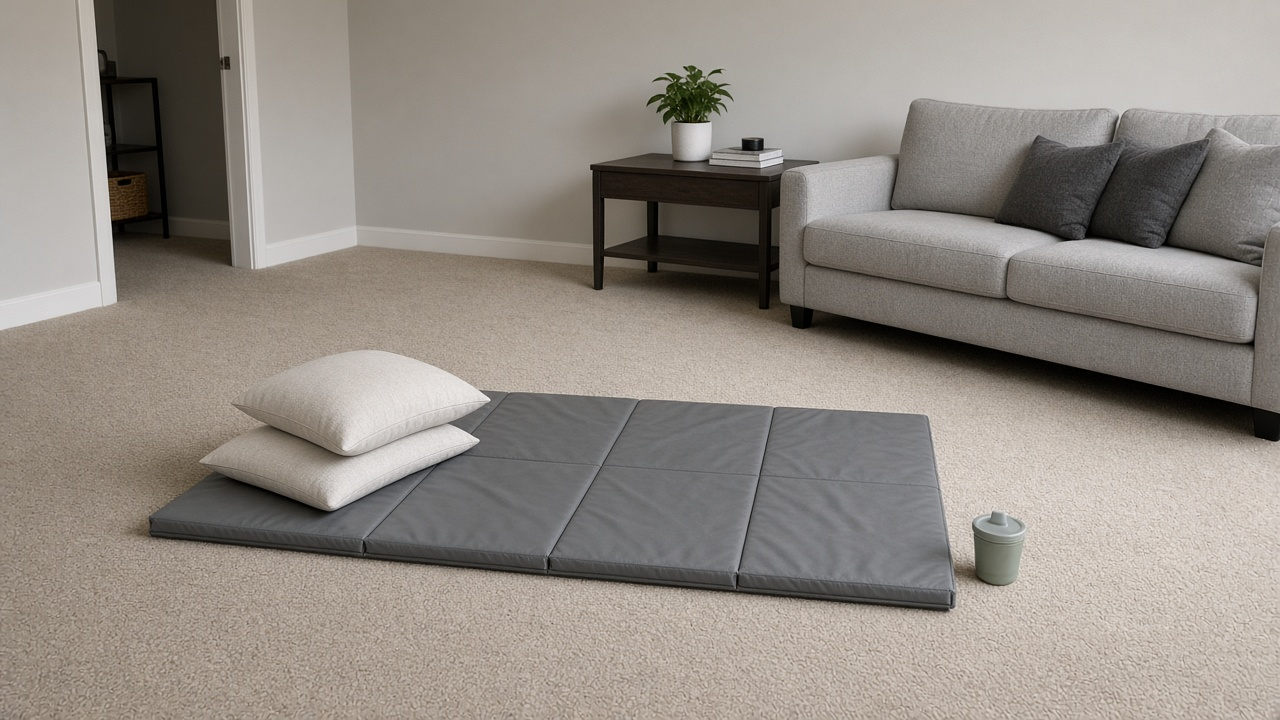
Mat folded, pillows back, coffee table back where it was. If they melt down when it ends, stop one round earlier next time.
What I tell friends: Wrestling with your kid is the only sport where you practice losing more convincingly.
Head and neck: Hands, feet and pillows stay below the shoulders. No headlocks or neck grabs.
No throwing or shaking: Nobody gets thrown, tossed or shaken. Shaking a child can cause bleeding inside the brain.
Arms: Lift under the arms. Pulling or swinging a small child by the hands or arms can pull an elbow out of place.
Surface: Thick rug, carpet or mat only. Hard corners stay out of rolling range.
Heights: Everyone stays on the floor. No jumping off furniture or onto anyone's stomach.
Stop word: Agree on it first: "When you say stop, I stop. When I say stop, you stop." It counts mid-laugh.
Upset: Crying, turning away or a hidden face means stop now and check in.
Size: Stay low and never put your weight on them. Young kids don't know their own strength, so you set the limits.
Siblings: One grown-up referees, and the bigger kid kneels. Kids get hurt more often wrestling each other.
Under 2: No pillows, and you do all the moving.
Skip it: If anyone is sick, hurt or overtired, sit this one out.
Tried it at home
Vetted by real parents
This page is general information, not medical advice. If you're worried about your child's health or safety, call your pediatrician.
A curated list of weekend activities, delivered to your inbox every Friday, to crush your weekend and connect with your kids.

AI-made image. Real chaos may vary.
Casey Hopwood. Pen name. AI portrait. The parent behind it is real.
About Casey
Casey Hopwood is our pen name, and that portrait is AI-generated. The parent behind it is real, has two young kids, and has lost more floor games than they'd like to say.
More Reviews
AI-made image. Real chaos may vary.
Ages 2–8 · Low mess
AI-made image. Real chaos may vary.
Ages 2–8 · Low mess
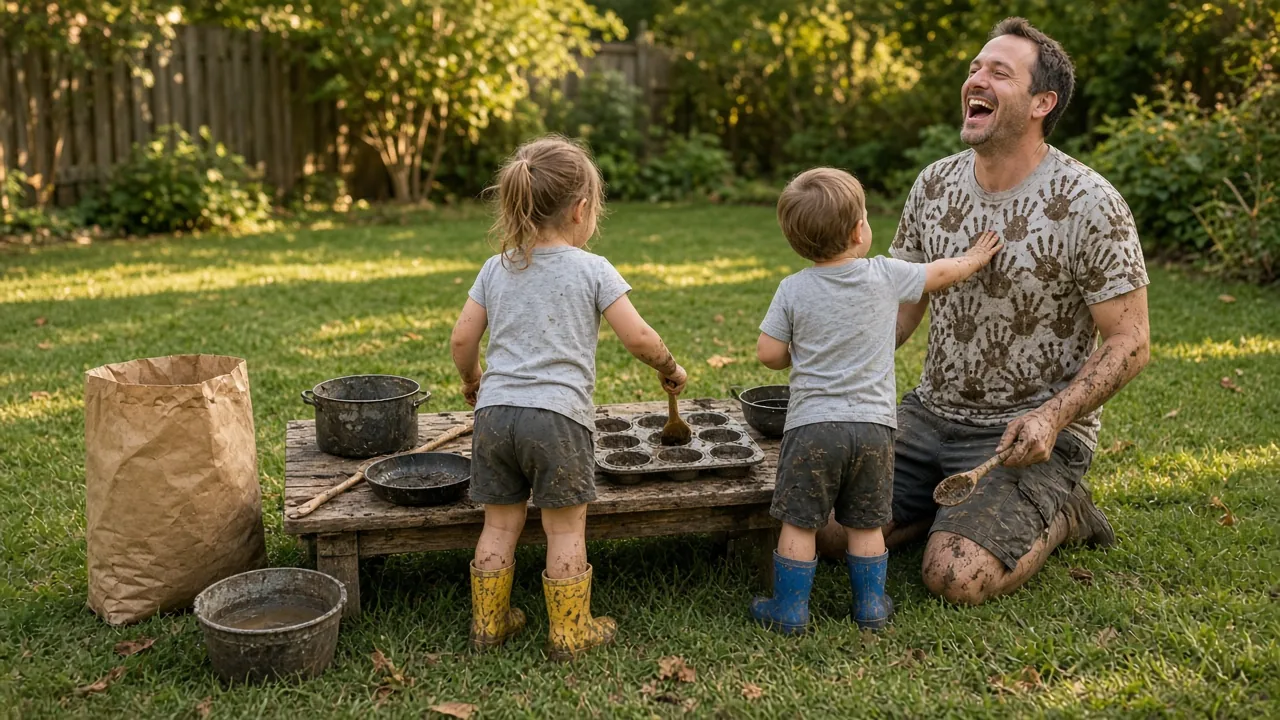
AI-made image. Real chaos may vary.
Ages 2–8 · High mess